Don’t Get Caught in a Cold Shower: A Homeowner’s Guide
A reliable supply of hot water is essential for daily life, from a morning shower to washing dishes and doing laundry. Yet, most homeowners in Paradise don’t think about their water heater until something goes wrong. A sudden cold shower or a puddle on the floor can turn a normal day into a stressful emergency. Understanding the warning signs of a failing water heater can save you from unexpected disruptions, costly water damage, and the headache of a last-minute replacement. Knowing when to repair versus when to replace is key to keeping your home running smoothly and efficiently.
At Monkey Wrench Plumbing, we know that plumbing problems are more than just an inconvenience; they disrupt your life. That’s why our licensed plumbers are trained to diagnose issues accurately and provide transparent solutions. This guide will walk you through the five key indicators that your water heater is nearing the end of its lifespan, helping you make an informed decision before a small issue becomes a major problem.
1. Inconsistent Water Temperature and Lack of Hot Water
One of the most obvious signs of a struggling water heater is its inability to provide consistent hot water. If you find your showers turning lukewarm unexpectedly or the hot water running out much faster than it used to, it’s a clear red flag. This often happens because of sediment buildup inside the tank, a common issue in areas with hard water like Las Vegas. The sediment layer insulates the water from the heating element, forcing the unit to work harder and less efficiently. While a single instance might be a fluke, persistent temperature problems indicate your system is failing.
2. Strange Noises Coming from the Tank
Your water heater should operate almost silently. If you start hearing popping, rumbling, or banging sounds, it’s time to pay attention. These noises are typically caused by the heating of sediment and mineral deposits that have settled at the bottom of the tank. As the water heats, it boils underneath this layer of sediment, creating the strange sounds. This process not only reduces efficiency but also causes the tank to deteriorate from the inside out. Ignoring these sounds can lead to cracks and leaks over time. Regular plumbing maintenance can help, but once the noise becomes significant, a replacement is often the safest bet.
3. Discolored or Rusty Water
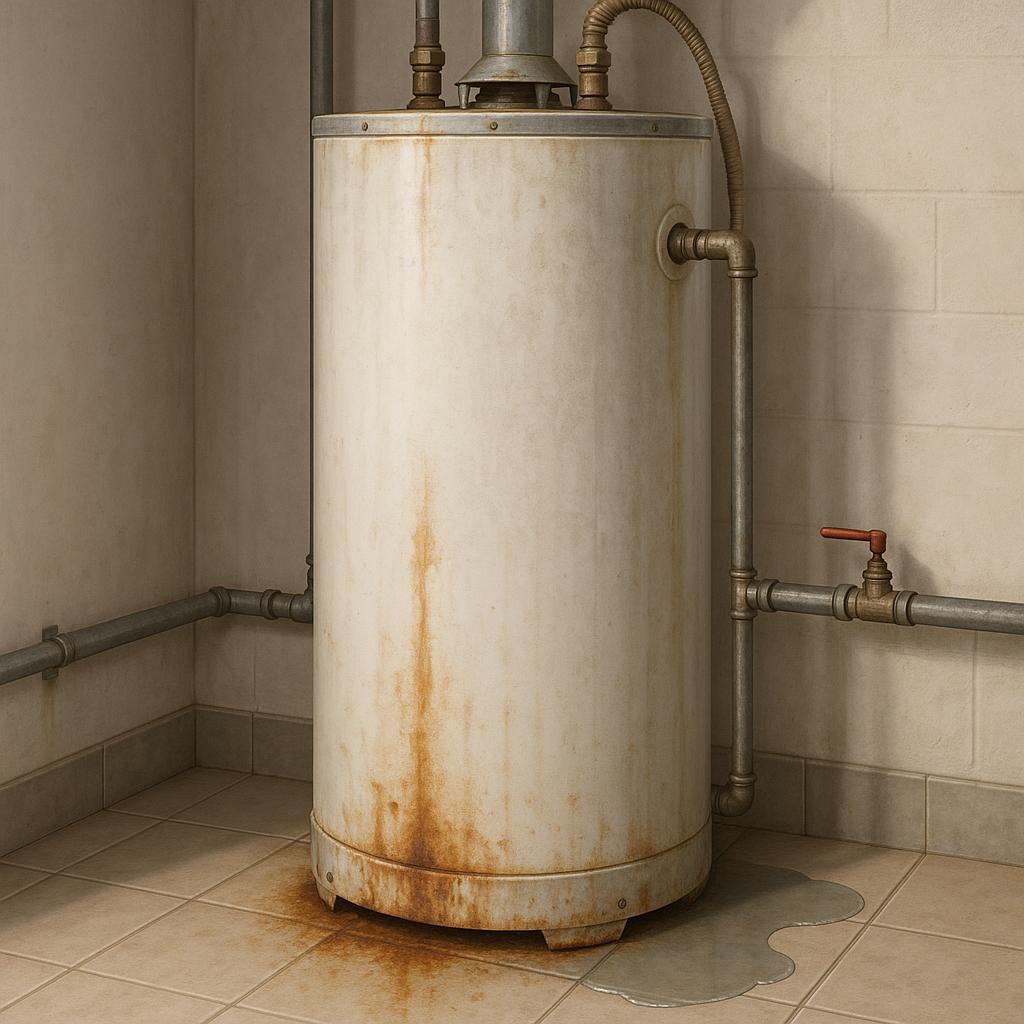
If the hot water coming from your taps has a rusty, brownish tint, it’s a strong indicator that the inside of your water heater tank is corroding. The anode rod inside the tank is designed to prevent rust, but it gets consumed over time. Once it’s gone, the tank itself begins to rust. This not only affects your water quality but is also a sign that a leak is imminent. While rusty water could also be from old pipes, if the discoloration only appears with hot water, the water heater is almost certainly the culprit. This is a serious issue that requires immediate attention from a professional plumber.
4. Water Leaks or Moisture Around the Unit
Any amount of water pooling around the base of your water heater is a cause for concern. While it could be a simple issue with a loose connection or the temperature and pressure (T&P) relief valve, it often signals a fracture in the internal tank. As the metal of the tank heats and cools repeatedly over the years, it expands and contracts, which can eventually lead to small cracks. A leak from the tank itself is not repairable and requires a full replacement. Check the area around your unit regularly for moisture, as catching a small leak early can prevent a catastrophic flood and extensive water damage to your home.
5. The Age of Your Water Heater
Even if you don’t notice any of the signs above, age is a critical factor. Most traditional tank-style water heaters have a lifespan of about 8 to 12 years. If your unit is approaching or has surpassed the 10-year mark, it’s operating on borrowed time. You can typically find the manufacturing date on a sticker on the side of the tank. Proactively replacing an old unit can save you money on energy bills, as newer models are significantly more efficient. It also provides peace of mind, knowing you won’t be surprised by a sudden failure. For homeowners looking for even greater efficiency and an endless supply of hot water, upgrading to a tankless water heater could be an excellent long-term investment.
Did You Know?
According to the U.S. Department of Energy, water heating is the second largest expense in most homes, accounting for about 18% of your utility bill. Upgrading to a modern, energy-efficient water heater can save a typical family hundreds of dollars per year. Additionally, water heater failures are one of the top five sources of residential water damage.
The Hard Water Challenge in Paradise, Nevada
Living in Paradise, NV, and the greater Las Vegas area means dealing with some of the hardest water in the country. This high concentration of minerals like calcium and magnesium significantly impacts your plumbing, especially your water heater. Hard water accelerates the formation of sediment (scale) inside the tank, leading to:
- Reduced Efficiency: The layer of scale forces your water heater to use more energy to heat the water, driving up your utility bills.
- Shorter Lifespan: The constant strain and internal corrosion caused by scale can shorten the life of your water heater by several years.
- Clogged Pipes: Scale can also build up in your pipes, reducing water flow and leading to more frequent drain issues.
To combat these issues, consider installing a whole-home water filtration or softening system. These systems protect your water heater and all other water-using appliances, saving you money on repairs and replacements in the long run.
Ready for Reliable Hot Water?
Don’t wait for a plumbing emergency. If your water heater is showing any of these signs, it’s time to act. The expert plumbers at Monkey Wrench Plumbing are here to help residents in Paradise and across Las Vegas with honest advice, transparent pricing, and solutions that last. We’ll help you decide if a repair or replacement is the right choice for your home and budget.
Frequently Asked Questions
How long does a typical water heater last in Las Vegas?
Due to the hard water in Las Vegas, a traditional tank water heater’s lifespan is often shorter, typically around 8-10 years. Regular maintenance, including flushing the tank annually to remove sediment, can help extend its life.
Is it better to repair or replace my water heater?
This depends on the age of the unit, the cost of the repair, and its overall condition. As a general rule, if the water heater is over 10 years old and the repair cost is more than 50% of a new unit’s price, replacement is the more economical choice in the long run.
What are the benefits of a tankless water heater?
Tankless water heaters offer several advantages, including endless hot water on demand, higher energy efficiency (which lowers utility bills), a much longer lifespan (20+ years), and a compact size that saves space.
How can I find out how old my water heater is?
Look for the manufacturer’s serial number on the sticker on the side of the tank. The first few characters usually indicate the month and year of manufacture. For example, a serial number starting with “F08” might mean it was made in June (F is the 6th letter) of 2008.
Glossary of Terms
Anode Rod
A metal rod, typically made of magnesium or aluminum, that is suspended in a water heater tank to prevent corrosion of the tank’s inner lining. It is often called a “sacrificial” rod because it corrodes instead of the tank.
Hard Water
Water that has a high mineral content, particularly calcium and magnesium. Hard water causes scale buildup in pipes and appliances.
Sediment
The minerals and sand particles that settle out of hard water when it is heated. This material collects at the bottom of a water heater tank, reducing efficiency and causing damage.
T&P Valve (Temperature & Pressure Relief Valve)
A safety device installed on all tank water heaters. It automatically opens to release water if the temperature or pressure inside the tank gets too high, preventing a potential explosion.