Spot the Trouble Before It Starts
Nothing disrupts a morning routine faster than an ice-cold shower. For homeowners in Sunrise Manor, a reliable water heater isn’t a luxury—it’s essential for daily life. Yet, these hardworking appliances often fail with little warning, leading to stressful, messy, and expensive emergencies. Understanding the subtle signals your water heater sends before it breaks down can save you from a major headache. From strange noises to inconsistent temperatures, your unit is often telling you it needs attention. We’ll walk you through the key warning signs that it might be time for a water heater repair or replacement.
Key Indicators of Water Heater Failure
1. Lukewarm or Inconsistent Hot Water
If your shower goes from hot to cold unexpectedly or you can’t seem to get enough hot water for your needs, your water heater is struggling. This is often one of the first signs of trouble. The cause could be a malfunctioning thermostat or, more commonly in Las Vegas, significant sediment buildup at the bottom of the tank. This layer of mineral deposits insulates the water from the heating element, forcing it to work harder and less effectively. Over time, this strain can lead to complete failure of the heating components.
2. Strange Noises (Rumbling, Popping, or Banging)
Your water heater should operate almost silently. If you start hearing rumbling, popping, or banging sounds, it’s a clear sign of sediment buildup. As the mineral deposits from Las Vegas’s famously hard water solidify at the bottom of the tank, water gets trapped underneath. When the burner kicks on, this trapped water boils and steams, causing the popping and banging noises as it escapes. This process not only reduces efficiency but also weakens the tank’s structural integrity over time, potentially leading to leaks.
3. Discolored or Smelly Water
When you turn on the hot water tap, does the water appear rusty or have a metallic odor? This is a serious red flag. Rusty water indicates that the inside of your water heater tank is corroding. The anode rod, a component designed to prevent rust, may have completely deteriorated, leaving the tank vulnerable. Once corrosion takes hold, a leak is almost inevitable. Addressing this issue promptly can determine whether you need a simple part replacement or an entire new water heater installation.
4. Visible Leaks or Moisture
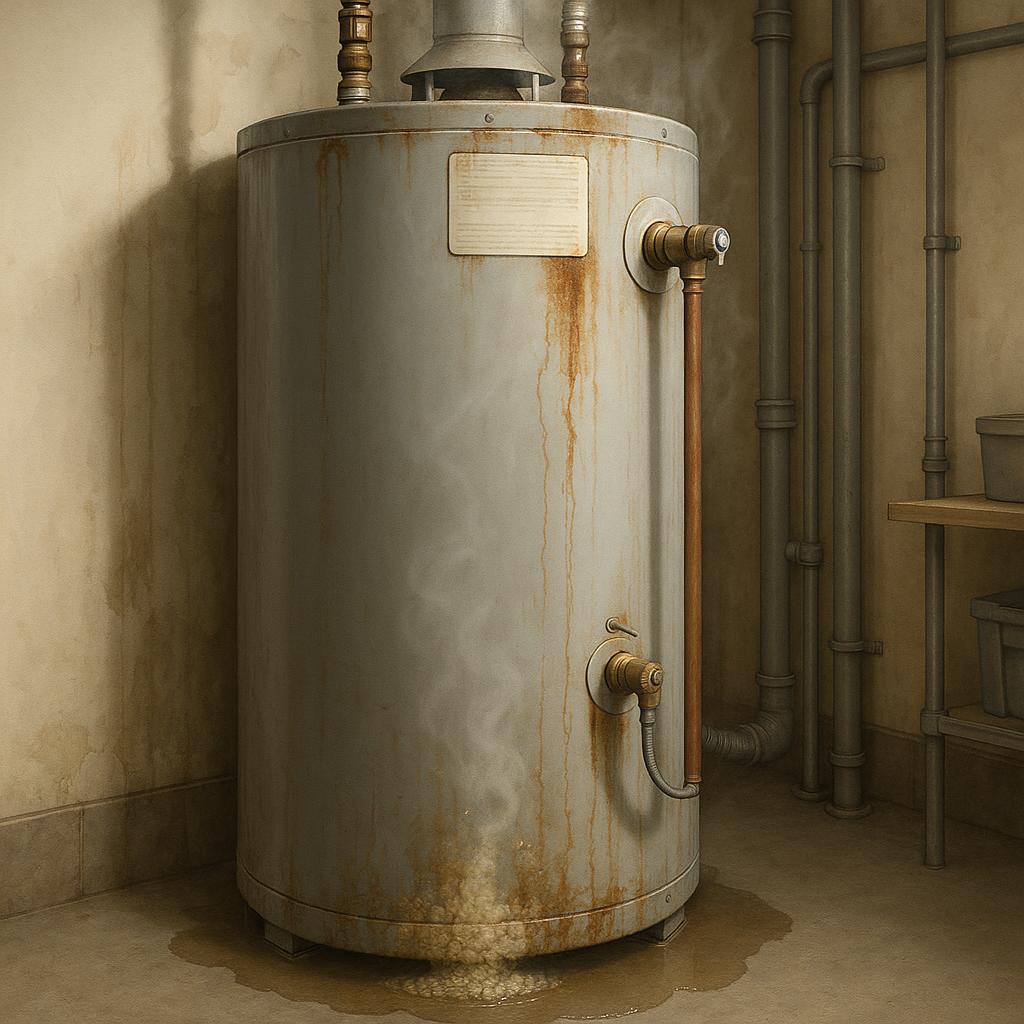
Any amount of water pooling around the base of your water heater demands immediate attention. While a leak could come from a fitting or valve, it often signals a crack or fracture in the tank itself. A slow drip can quickly turn into a significant flood, causing extensive water damage to your floors, walls, and belongings. If you notice any moisture, inspect the connections first, but be prepared to call a professional plumber to assess the situation right away.
5. The Age of Your Unit
A conventional tank-style water heater typically lasts between 8 to 12 years. If your unit is approaching or has surpassed this age range, it’s living on borrowed time. You can usually find the manufacturing date on the manufacturer’s sticker on the side of the tank. Proactively replacing an older unit can save you from the stress and expense of an emergency breakdown and allow you to explore more efficient options, like a modern tankless water heater that provides endless hot water.
The Impact of Hard Water in Sunrise Manor
Living in the Las Vegas valley means dealing with some of the hardest water in the country. This high concentration of minerals like calcium and magnesium is tough on plumbing appliances, especially water heaters. These minerals form scale and sediment that accumulate inside your tank, reducing its efficiency, shortening its lifespan, and causing most of the problems mentioned above. Regular plumbing maintenance, including flushing the tank, is crucial. For a long-term solution, many Sunrise Manor homeowners opt for a whole-home water filtration system to protect their investment and improve water quality throughout the house.
Repair or Replace? Making the Right Choice
When your water heater acts up, you face a critical decision. A quick repair might seem appealing, but sometimes a replacement is the more cost-effective solution in the long run. Here’s a quick guide to help you decide.
| Factor | Repair is a Good Option If… | Replacement is a Better Option If… |
|---|---|---|
| Age of Unit | It’s less than 8 years old. | It’s over 10-12 years old. |
| Cost of Repair | The repair costs less than 50% of a new unit. | The repair is extensive and expensive. |
| Frequency of Issues | This is the first significant problem you’ve had. | You’ve had multiple repairs in the last couple of years. |
| Problem Type | The issue is with a replaceable part like a thermostat or heating element. | The tank itself is leaking or severely corroded. |
Don’t Wait for a Plumbing Emergency
If your water heater is showing any of these signs, the team at Monkey Wrench Plumbing is here to help. We provide honest assessments and transparent pricing so you can make the best decision for your home and budget.
Frequently Asked Questions
How often should I have my water heater serviced?
We recommend having your water heater professionally inspected and flushed at least once a year. Annual maintenance is especially important in the Las Vegas area due to the hard water, as it helps remove sediment buildup, improves efficiency, and extends the life of your unit.
What are the benefits of a tankless water heater?
Tankless water heaters offer several advantages, including endless hot water on demand, higher energy efficiency (which can lower your utility bills), and a much longer lifespan (often 20+ years). They also take up significantly less space than traditional tank models. Our experts can help you determine if a tankless model is the right fit for your home.
Can a failing water heater be dangerous?
Yes, in rare cases, a failing water heater can be dangerous. A malfunctioning temperature and pressure (T&P) relief valve combined with excessive pressure buildup can theoretically cause a tank to rupture. Any signs of leaks, corrosion, or malfunctioning safety features should be addressed by a licensed plumber immediately.
Glossary of Terms
- Sediment
- Mineral deposits, primarily calcium and magnesium, that settle at the bottom of a water heater tank from hard water. This buildup reduces efficiency and can damage the tank.
- Anode Rod
- A metal rod (usually magnesium or aluminum) that hangs inside the water heater tank. It is designed to corrode in place of the tank’s steel lining, protecting it from rust. It is a sacrificial part that needs to be replaced periodically.
- T&P Valve (Temperature & Pressure Relief Valve)
- A critical safety device that automatically opens to release water if the temperature or pressure inside the tank gets too high, preventing a potential explosion.
- Heating Element
- In an electric water heater, this is the component that heats the water. It’s an electrical resistor that gets hot when electricity passes through it. Gas heaters use a burner assembly at the bottom of the tank.