Don’t Get Caught in a Cold Shower. Know the Warning Signs.
A reliable hot water supply is a necessity, not a luxury, especially for busy households in Las Vegas. From morning showers to washing dishes, we depend on our water heaters daily. But when they start to fail, they rarely do so quietly. Ignoring the early warning signs can lead to an icy surprise, an expensive utility bill, or even a messy leak. Understanding these signals helps you act before a minor issue becomes a major emergency, saving you time, stress, and money.
Key Indicators of Water Heater Failure
Your water heater is constantly working behind the scenes. Like any hardworking appliance, it will eventually show signs of wear and tear. Here are the seven most common signs that it might be time for a replacement.
1. Inconsistent Hot Water (or No Hot Water at All)
This is often the first and most obvious sign. If your showers are getting shorter because the hot water runs out, or if you’re getting lukewarm water instead of hot, your unit is struggling. It could be a failing heating element or a significant sediment buildup insulating the water from the heat source. While a single instance might be a fluke, consistent temperature problems signal a deeper issue.
2. Strange Noises Coming From the Tank
Are you hearing rumbling, popping, or crackling sounds from your water heater? This isn’t normal. These noises are typically caused by layers of hardened sediment at the bottom of the tank. As the water heats, it gets trapped under the sediment and boils, creating the popping sound. This process not only reduces efficiency but also puts significant stress on the metal tank, leading to cracks and leaks over time.
3. Leaks or Puddles Around the Base
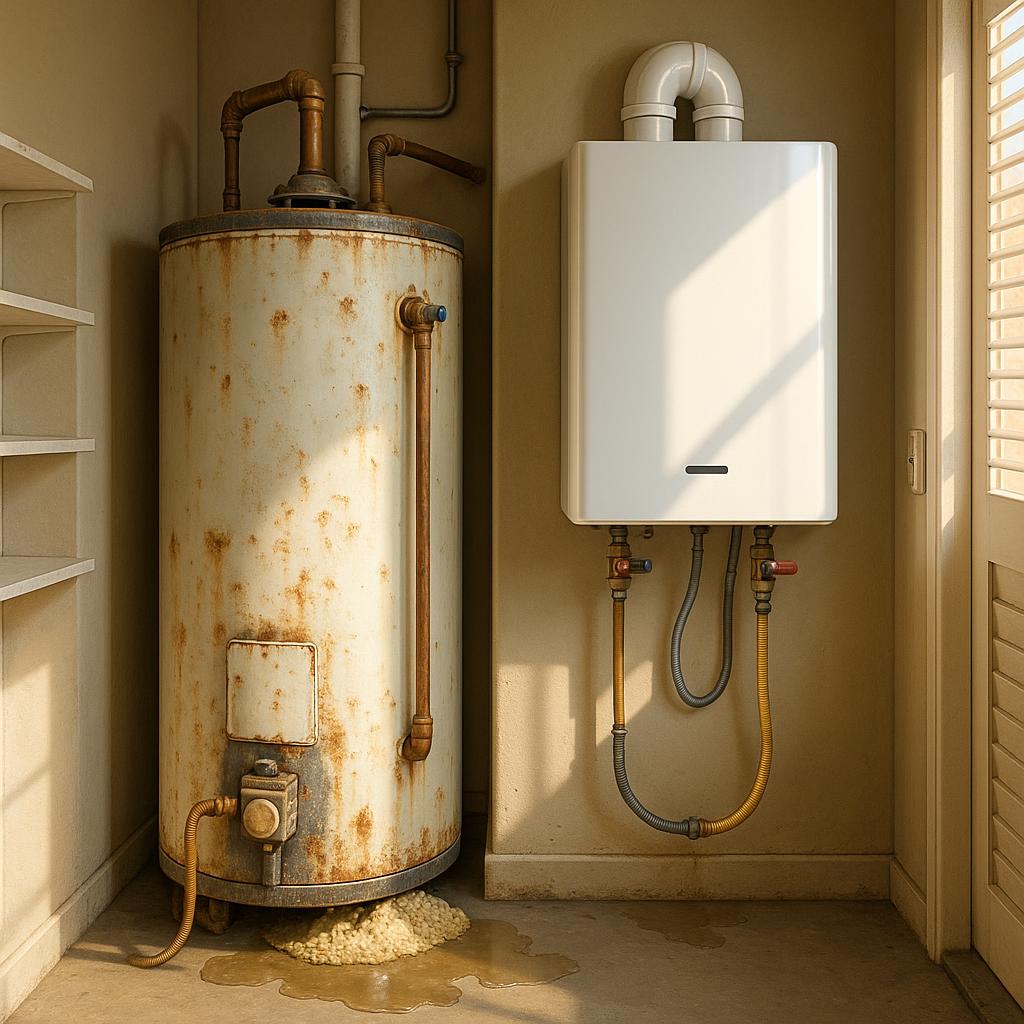
Any sign of moisture around your water heater should be taken seriously. While it could be a simple issue with a connection or valve, it can also indicate a fracture in the internal tank. A slow drip can quickly turn into a significant leak, causing water damage to your garage or home. If you see water pooling, it’s time to call a professional immediately.
4. Rusty or Murky Water
If you turn on the hot tap and see discolored or rusty water, it’s a strong indicator of corrosion inside your water heater’s tank. The anode rod is designed to prevent this, but once it’s depleted, the tank itself begins to rust. This not only affects your water quality but also means the tank’s integrity is compromised and a leak is imminent.
5. The Unit’s Age
Age is a critical factor. Most traditional tank water heaters have a lifespan of about 8-12 years. If your unit is approaching or has surpassed this age, it’s operating on borrowed time. You can typically find the manufacturing date on the serial number sticker. An older unit is less efficient and more prone to sudden failure.
6. Rising Energy Bills
Is your power or gas bill creeping up without a corresponding increase in usage? An aging water heater could be the culprit. As sediment builds up and parts wear out, the unit has to work much harder to heat the same amount of water, consuming more energy and driving up your utility costs. A new, efficient model can often pay for itself over time in energy savings.
7. Frequent Repairs
If you find yourself calling for repairs on the same appliance every year, it’s a clear sign that the unit is nearing the end of its life. The costs of multiple repairs can quickly add up and often exceed the value of the aging heater. Investing that money into a new, reliable unit is a much wiser long-term financial decision.
The Las Vegas Hard Water Factor
Why Hard Water is Your Water Heater’s Worst Enemy
In Las Vegas, we have some of the hardest water in the country. This high concentration of minerals like calcium and magnesium creates scale, a rock-like buildup that wreaks havoc on plumbing systems. Inside your water heater, this scale forms a layer at the bottom of the tank, causing those rumbling sounds and forcing the heating elements to work overtime. This reduces efficiency, increases wear, and significantly shortens the appliance’s lifespan. That’s why professional plumbing maintenance, including regular tank flushing, is crucial for homeowners in areas like Henderson and across the valley.
Upgrading Your System: Tank vs. Tankless
When it’s time for a replacement, you have options. Modern technology offers more than just the traditional storage tank. Here’s a quick comparison to help you decide what’s best for your Las Vegas home.
| Feature | Traditional Tank Heaters | Tankless Water Heaters |
|---|---|---|
| Lifespan | 8-12 years | 20+ years |
| Energy Efficiency | Lower (constantly heats stored water) | Higher (heats water on demand) |
| Hot Water Supply | Limited to tank capacity | Endless hot water supply |
| Space Required | Large footprint | Compact, wall-mounted design |
For many families in communities like Summerlin South, upgrading to a tankless water heater offers significant long-term benefits in both comfort and energy savings.
What to Do When You Suspect a Problem
If you’ve noticed any of the signs above, don’t wait for a complete failure. Here are your next steps:
1. Check the Basics
For a gas heater, check if the pilot light is lit. For an electric one, check your circuit breaker to ensure it hasn’t tripped. Sometimes, the fix is simple.
2. Don’t Attempt DIY Repairs
Water heaters involve gas lines, high voltage electricity, and pressure buildup. For your safety, complex diagnostics and repairs should always be left to a licensed plumber.
3. Call for a Professional Inspection
A professional can accurately diagnose the problem, tell you whether a repair is sufficient, or confirm if a replacement is the most cost-effective solution.
Did You Know?
- Water heating is typically the second largest energy expense in a home, accounting for about 18% of your utility bill.
- The first residential water heater was invented in 1889 by a painter named Edwin Ruud.
- Lowering your water heater’s thermostat from 140°F to 120°F can reduce your water heating costs by 4-10% annually and slow mineral buildup.
Tired of Unreliable Hot Water?
Don’t wait for a breakdown to ruin your day. If your water heater is showing signs of failure, get a professional opinion from a team that understands Las Vegas plumbing. At Monkey Wrench Plumbing, we provide honest assessments and transparent solutions.
Frequently Asked Questions
How long do water heaters last in Las Vegas?
Due to the extremely hard water, water heaters in Las Vegas often have a shorter lifespan. A traditional tank model may last 6-10 years, while a well-maintained tankless unit can last over 20 years. Regular maintenance is key to maximizing its lifespan.
Is a tankless water heater worth it in Nevada?
For many homeowners, yes. Tankless heaters are more energy-efficient, provide endless hot water (great for larger families), and last much longer than traditional tanks. While the upfront cost is higher, the long-term savings on energy bills and replacement costs can make it a worthwhile investment.
How much does a new water heater cost?
The cost varies widely based on the type (tank vs. tankless), size, brand, and installation complexity. The best way to get an accurate price for your specific needs is to request a free quote from a licensed plumber.
Can I replace a water heater myself?
We strongly advise against it. Installation requires knowledge of local plumbing codes, proper handling of gas or electrical lines, and ensuring correct ventilation. An improper installation can be dangerous, leading to gas leaks, carbon monoxide poisoning, or water damage. Always hire a licensed professional.
Glossary of Terms
Anode Rod
A metal rod, usually made of magnesium or aluminum, that is suspended in a water heater’s tank. It helps prevent corrosion of the tank by attracting corrosive elements in the water, effectively sacrificing itself to extend the life of the heater.
Hard Water
Water with a high concentration of dissolved minerals, primarily calcium and magnesium. It can cause scale buildup in pipes and appliances.
Sediment Buildup (Scale)
The accumulation of minerals from hard water at the bottom of a water heater tank. This buildup insulates the water from the heating element, reducing efficiency and causing damage over time.
Tankless Water Heater
A system that heats water on-demand as it flows through the unit, rather than storing hot water in a tank. This results in higher energy efficiency and an endless supply of hot water.