How Long Does a Water Heater Last in Las Vegas?
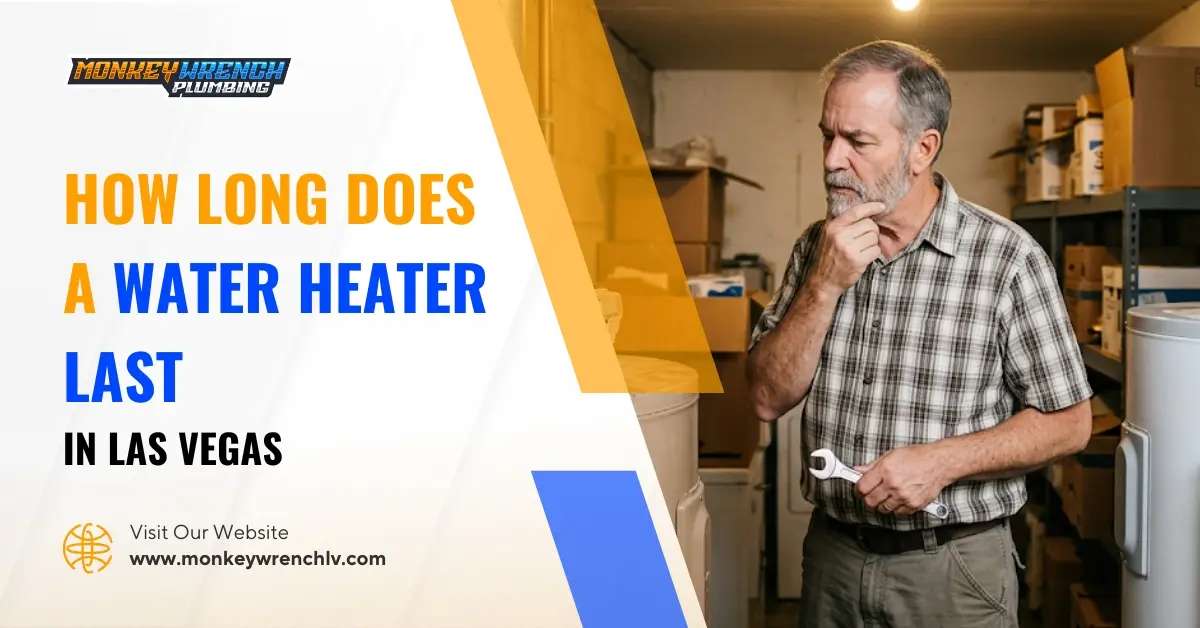
Most tank water heaters last 8 to 12 years across the country. But if you live in Las Vegas, don’t count on getting the full 12.
Las Vegas hard water cuts that range down to roughly 6 to 10 years. The mineral content in our tap supply is more than double the national average, and it takes a serious toll on every water-heating system in your home.
Tankless models hold up better. Nationally, they last 15 to 20 years. In Las Vegas, expect closer to 10 to 15 years, especially without regular descaling.
Key Takeaway –Water Heater Last in Las Vegas
Tank water heaters get 6 to 10 years in Las Vegas (vs. 8 to 12 nationally). Tankless units get 10 to 15 years (vs. 15 to 20). Hard water, desert heat, and skipped maintenance are the three biggest reasons your unit dies early.
So what makes our local conditions so rough on these systems? It starts with what’s actually flowing through your pipes.
Water Heater Lifespan by Type (Las Vegas Adjusted)
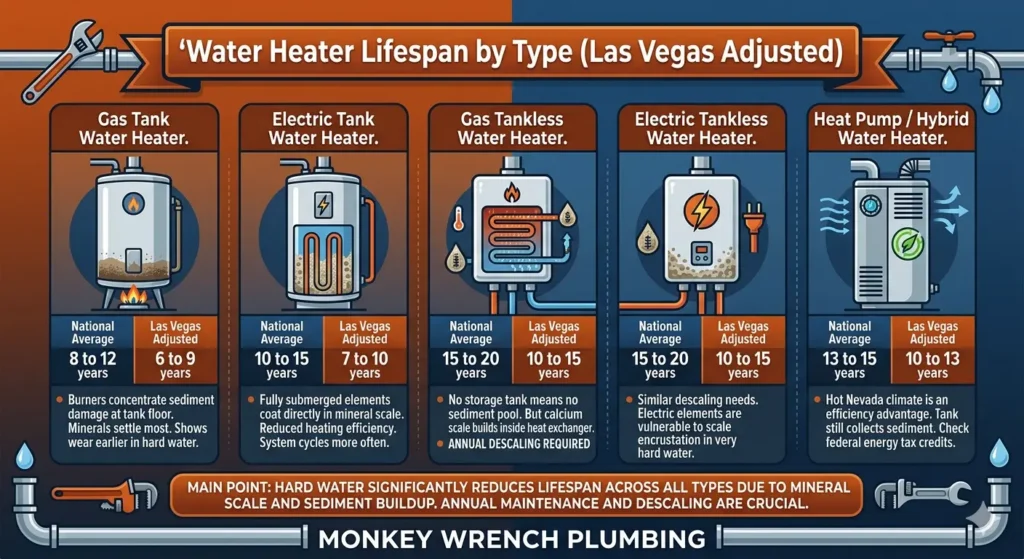
Not every system holds up the same way against our conditions. Here’s how each type performs with Las Vegas hard water factored in.
|
Type |
National Lifespan | Las Vegas Adjusted |
Best For |
|
Gas Tank |
8 to 12 years | 6 to 9 years |
Budget-conscious homeowners |
|
Electric Tank |
10 to 15 years | 7 to 10 years |
All-electric homes |
|
Gas Tankless |
15 to 20 years | 10 to 15 years |
High-demand households |
|
Electric Tankless |
15 to 20 years | 10 to 15 years |
Compact installations |
| Heat Pump / Hybrid | 13 to 15 years | 10 to 13 years |
Energy savings focus |
Gas Tank Water Heater
National average: 8 to 12 years | Las Vegas adjusted: 6 to 9 years
Gas burners heat from below, which concentrates sediment damage right at the tank floor where minerals settle the most. These units tend to show wear earlier than other types in hard water environments.
Electric Tank Water Heater
National average: 10 to 15 years | Las Vegas adjusted: 7 to 10 years
Electric elements sit fully submerged, so mineral scale coats them directly. This reduces heating efficiency faster than gas models and forces the system to cycle more often.
Gas Tankless Water Heater
National average: 15 to 20 years | Las Vegas adjusted: 10 to 15 years
No storage tank means no sediment pool. But calcium scale builds inside the heat exchanger instead. Annual descaling is required. Skipping even one year in Las Vegas conditions can permanently damage the unit.
Electric Tankless Water Heater
National average: 15 to 20 years | Las Vegas adjusted: 10 to 15 years
Similar descaling needs as gas tankless models. The electric elements are especially vulnerable to scale encrustation when exposed to very hard supply.
Heat Pump / Hybrid Water Heater
National average: 13 to 15 years | Las Vegas adjusted: 10 to 13 years
These systems pull warmth from surrounding air, which makes Nevada’s hot climate an advantage for efficiency. However, the tank portion still collects sediment just like a standard unit. Federal energy tax credits under the Inflation Reduction Act can offset the higher upfront cost.
Why Las Vegas Hard Water Destroys Water Heaters Faster
You’ve probably heard the term “hard water” thrown around. But most people don’t realize just how extreme the situation is here in Southern Nevada.
How Hard Is Las Vegas Water? (The Numbers Tell the Story)
The Las Vegas Valley Water District (LVVWD) reports our tap water tests at 278 to 304 parts per million (PPM). That’s 16 to 18 grains per gallon, which puts it firmly in the “very hard” category.
For comparison, the national average sits between 60 and 120 PPM. That means Las Vegas water is more than twice as mineral-heavy as what most Americans deal with at home.
Where does all of it come from? Snowmelt from the Rocky Mountains flows into the Colorado River, picking up calcium and magnesium as it passes through layers of limestone. That mineral-rich supply eventually settles into Lake Mead, which is where roughly 90% of our drinking supply originates.
What Hard Water Actually Does Inside Your Tank
Every time your unit heats a fresh batch, those dissolved minerals separate from the liquid and form solid deposits. Calcium carbonate is the main culprit.
Over time, this buildup coats the heating element and the tank floor. It creates a thermal barrier that blocks heat from reaching the supply efficiently. Your burner or element has to run longer and hotter just to push warmth through that crusty layer.
That overheating weakens the steel lining. Micro-cracks form. And once cracks appear, leaks aren’t far behind.
The damage doesn’t stop there. Your anode rod, which is the sacrificial metal bar designed to attract corrosion so the tank walls don’t rust, corrodes 30 to 50 percent faster in mineral-rich conditions. Once that rod is fully depleted, the tank itself starts rusting from the inside out.
Desert Heat Makes It Worse
Here’s a factor almost nobody talks about. Most Las Vegas water heaters sit in unconditioned garages. During summer months, garage temperatures easily climb past 120 degrees Fahrenheit.
That extreme ambient heat adds stress on top of the mineral damage already happening inside the tank. Seals degrade faster. Metal components expand and contract with wider temperature swings. The combination accelerates wear in ways you simply don’t see in cooler, softer-water cities.
7 Warning Signs Your Las Vegas Water Heater Is Failing
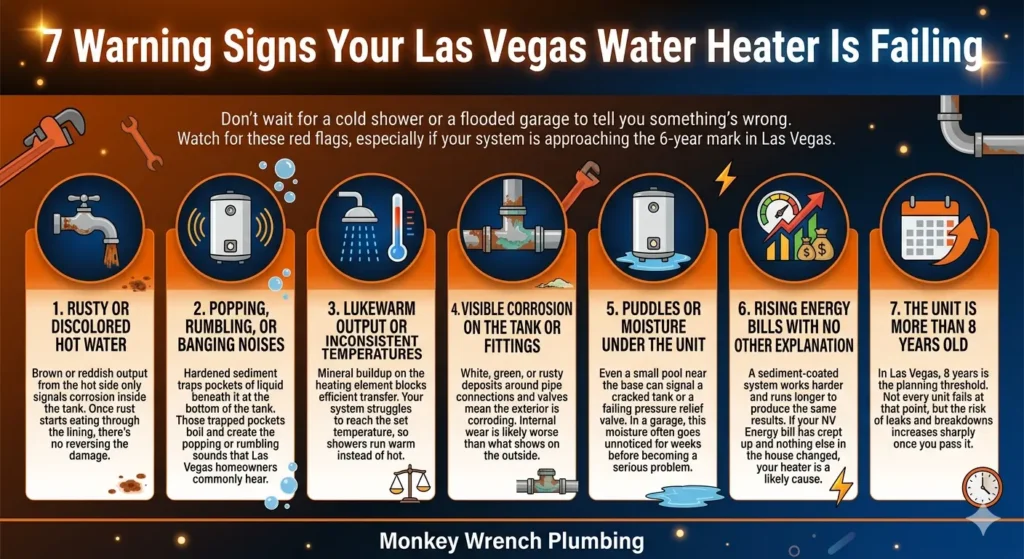
Don’t wait for a cold shower or a flooded garage to tell you something’s wrong. Watch for these red flags, especially if your system is approaching the 6-year mark in Las Vegas.
1. Rusty or Discolored Hot Water
Brown or reddish output from the hot side only signals corrosion inside the tank. Once rust starts eating through the lining, there’s no reversing the damage.
2. Popping, Rumbling, or Banging Noises
Hardened sediment traps pockets of liquid beneath it at the bottom of the tank. Those trapped pockets boil and create the popping or rumbling sounds that Las Vegas homeowners commonly hear.
3. Lukewarm Output or Inconsistent Temperatures
Mineral buildup on the heating element blocks efficient transfer. Your system struggles to reach the set temperature, so showers run warm instead of hot.
4. Visible Corrosion on the Tank or Fittings
White, green, or rusty deposits around pipe connections and valves mean the exterior is corroding. Internal wear is likely worse than what shows on the outside.
5. Puddles or Moisture Under the Unit
Even a small pool near the base can signal a cracked tank or a failing pressure relief valve. In a garage, this moisture often goes unnoticed for weeks before becoming a serious problem.
6. Rising Energy Bills With No Other Explanation
A sediment-coated system works harder and runs longer to produce the same results. If your NV Energy bill has crept up and nothing else in the house changed, your heater is a likely cause.
7. The Unit Is More Than 8 Years Old
In Las Vegas, 8 years is the planning threshold. Not every unit fails at that point, but the risk of leaks and breakdowns increases sharply once you pass it.
FAQ: Water Heater Lifespan in Las Vegas
Do I need a permit to replace a water heater in Clark County?
Yes. Clark County requires a plumbing permit for every water heater replacement. Your licensed plumber should handle the paperwork and schedule the post-installation inspection. Skipping the permit can cause issues with future home sales or insurance claims.
How often should I flush my water heater in Las Vegas?
Every 6 months. Las Vegas mineral content is more than double the national average, so sediment accumulates much faster than in most cities. Twice-yearly flushing keeps buildup from damaging your heating element and tank lining.
Does a water softener really extend water heater life?
Yes. A whole-home water softener can add 3 to 5 years to your system’s lifespan by removing calcium and magnesium before they enter the tank. It also protects your pipes, faucets, and every other appliance connected to your plumbing.
Is it worth switching to tankless in Las Vegas?
It depends on your household. Tankless systems last longer and save energy, but they need annual descaling in Las Vegas conditions and cost significantly more upfront. If you already have a softener and use a lot of hot supply daily, tankless can be a strong investment.
How do I find the age of my water heater?
Check the serial number on the manufacturer’s label. Most brands encode the manufacture date in the first four digits. Typically, the first two numbers represent the year and the next two indicate the month. Some brands reverse that order, so check the manufacturer’s website if you’re unsure.
What size water heater do I need for my Las Vegas home?
A 40-gallon tank typically serves 1 to 2 people. A 50-gallon model works well for households of 3 to 4. Families with 5 or more members should consider a 75-gallon tank or a tankless system to avoid running out during peak usage times.
Protect Your Investment Before Hard Water Takes It
Las Vegas hard water shortens your water heater’s life by 2 to 4 years compared to the national average. That’s real money walking out the door if you’re not staying ahead of it.
Regular maintenance, a reliable softener, and knowing when to replace instead of repair are the three best ways to protect your investment. And when the time comes for a professional inspection, a flush, or a full replacement, Monkey Wrench Plumbing serves homeowners throughout the Las Vegas metropolitan area with honest pricing and licensed technicians who understand exactly what our local conditions do to your plumbing.
Call (702) 900-5992 to schedule your water heater inspection or get a free replacement estimate today.